Ad Astra is a 2019 American science fiction adventure film produced, co-written, and directed by James Gray.Starring Brad Pitt, Tommy Lee Jones, Ruth Negga, Liv Tyler, and Donald Sutherland, it follows an astronaut who goes into space in search of his lost father, whose experiment threatens the Solar System.. The project was announced in early 2016, with Gray saying he wanted to feature "the ...
This is a list of stories of the British science fiction series, The Tomorrow People.It was originally broadcast from 1973 to 1979, with a revival series airing from 1992 to 1995.
Broadway Danny Rose is a 1984 American black-and-white comedy film written and directed by Woody Allen.It follows a hapless theatrical agent who, by helping a client, gets dragged into a love triangle involving the mob. The film stars Allen as the titular character, as well as Mia Farrow and Nick Apollo Forte.. Broadway Danny Rose was screened out of competition at the 1984 Cannes Film Festival.
This is a clever film. Superficially it's like a slice out of some guy's
life but the crappy jokes and the characters make it live in your
memory.
It's subtle and clever and clear and engaging. And told in a
recounted flashback narrative so it could all be a story. Diegetic
storytelling is an underused technique.
Special. ABM Rating 2.9/3
Spider-Man: Far From Home is a 2019 American superhero film based on the Marvel Comics character Spider-Man, co-produced by Columbia Pictures and Marvel Studios, and distributed by Sony Pictures Releasing. It is the sequel to Spider-Man: Homecoming (2017) and the twenty-third film in the Marvel Cinematic Universe (MCU). The film is directed by Jon Watts, written by Chris McKenna and Erik Sommers, and stars Tom Holland as Peter Parker / Spider-Man, alongside Samuel L. Jackson, Zendaya, Cobie Smulders, Jon Favreau, J. B. Smoove, Jacob Batalon, Martin Starr, Marisa Tomei, and Jake Gyllenhaal. In Spider-Man: Far From Home, Parker is recruited by Nick Fury and Mysterio to face the Elementals while he is on a school trip to Europe.
Discussions for a sequel to Spider-Man: Homecoming began by October 2016, and the project was confirmed later that year. Holland, Watts, and the writers were all set to return by the end of 2017. In 2018, Jackson and Gyllenhaal joined the cast as Fury and Mysterio, respectively. Holland revealed the sequel's title ahead of filming, which began in July 2018 and took place in England, the Czech Republic, Italy, and the New York metropolitan area. Production wrapped in October 2018. The film's marketing campaign was the most expensive for a film ever and attempted to avoid revealing spoilers for Avengers: Endgame prior to that film's April 2019 release.
Spider-Man: Far From Home premiered at the TCL Chinese Theatre on June 26, 2019, and was theatrically released in the United States on July 2. The film received positive reviews for its humor, visual effects, and performances (particularly those of Holland and Gyllenhaal). It grossed over $1.1 billion worldwide, making it the first Spider-Man film to pass the billion-dollar mark, Sony Pictures' highest-grossing film ever, and the third-highest-grossing film of 2019. A sequel is scheduled for release on July 16, 2021.
Tolkien is a 2019 American biographical drama film directed by Dome Karukoski and written by David Gleeson and Stephen Beresford.It is about the early life of English professor J. R. R. Tolkien, author of The Hobbit and The Lord of the Rings, as well as notable academic works.The film stars Nicholas Hoult, Lily Collins, Colm Meaney, and Derek Jacobi. ...
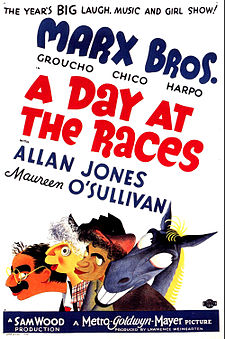
A Day at the Races (1937) is the seventh film starring the Marx Brothers, with Margaret Dumont, Allan Jones, and Maureen O'Sullivan. Like their previous Metro-Goldwyn-Mayer feature A Night at the Opera, this film was a major hit.
The Rebel (US title: Call Me Genius) is a 1961 satirical comedy film about the clash between bourgeois and bohemian cultures. Starring the British comedian Tony Hancock, it was written by Ray Galton and Alan Simpson. The film was made by Associated British Picture Corporation and distributed by Warner-Pathé (ABPC's distribution arm).
A Night at the Opera is a 1935 American comedy film starring the Marx Brothers, and featuring Kitty Carlisle, Allan Jones, Margaret Dumont, Sig Ruman, and Walter Woolf King. It was the first of five films the Marx Brothers made for Metro-Goldwyn-Mayer after their departure from Paramount Pictures, and the first after Zeppo left the act. The film was adapted by George S. Kaufman and Morrie Ryskind from a story by James Kevin McGuinness, with additional dialogue by Al Boasberg. It was directed by Sam Wood.
V for Vendetta is a 2005 dystopian political thriller film directed by James McTeigue and written by the Wachowskis, based on the 1988 DC/Vertigo Comics limited series of the same name by Alan Moore and David Lloyd. The film is set in an alternative future where a Nordic supremacist and neo-fascist totalitarian regime has subjugated the United Kingdom. Hugo Weaving portrays V, an anarchist freedom fighter who attempts to ignite a revolution through elaborate terrorist acts, and Natalie Portman plays Evey, a young, working-class woman caught up in V's mission, while Stephen Rea portrays the detective leading a desperate quest to stop V.
Modern Times is a 1936 American comedy film written and directed by Charlie Chaplin in which his iconic Little Tramp character struggles to survive in the modern, industrialized world. The film is a comment on the desperate employment and financial conditions many people faced during the Great Depression, conditions created, in Chaplin's view, by the efficiencies of modern industrialization.
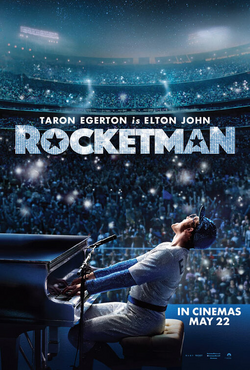
Rocketman is a 2019 biographical musical film based on the life of musician Sir Elton John.Directed by Dexter Fletcher and written by Lee Hall, it stars Taron Egerton as John, with Jamie Bell as Bernie Taupin, Richard Madden as John Reid, and Bryce Dallas Howard as Sheila Eileen. The film follows John in his early days as a prodigy at the Royal Academy of Music through his musical partnership ...
Apollo 18 is a 2011 American-Canadian alternate history found footage science fiction horror film written by Brian Miller, directed by Gonzalo López-Gallego, and produced by Timur Bekmambetov and Michele Wolkoff. After various release date changes, the film was released in the United States, United Kingdom, and Canada on September 2, 2011. However, the release dates for other territories vary.
Toy Story 4 is a 2019 American computer-animated comedy film produced by Pixar Animation Studios for Walt Disney Pictures.It is the fourth installment in Pixar's Toy Story series, and the sequel to 2010's Toy Story 3.It was directed by Josh Cooley (in his feature directorial debut) from a screenplay by Andrew Stanton and Stephany Folsom; the three also conceived the story alongside John ...
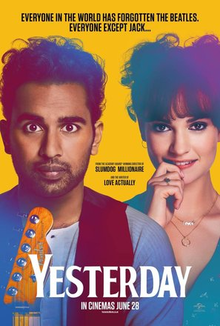
Yesterday is a 2019 British romantic comedy film directed by Danny Boyle and written by Richard Curtis, based on a story by Jack Barth and Curtis. It stars Himesh Patel as struggling musician Jack Malik, who, after an accident, finds himself the only person who remembers the Beatles and becomes famous after taking credit for their songs. The film also stars Lily James as the protagonist's ...
Avengers: Endgame is a 2019 American superhero film based on the Marvel Comics superhero team the Avengers, produced by Marvel Studios and distributed by Walt Disney Studios Motion Pictures.It is the sequel to 2012's The Avengers, 2015's Avengers: Age of Ultron, and 2018's Avengers: Infinity War, and the twenty-second film in the Marvel Cinematic Universe (MCU).
BlacKkKlansman is a 2018 American true crime blaxploitation film directed by Spike Lee and written by Charlie Wachtel, David Rabinowitz, Kevin Willmott, and Lee. The film is based on the 2014 memoir Black Klansman by Ron Stallworth. The film stars John David Washington as Stallworth, along with Adam Driver, Laura Harrier, and Topher Grace. Set in the early-1970s Colorado Springs, the plot follows the first African-American detective in the city's police department as he sets out to infiltrate and expose the local Ku Klux Klan chapter.
Spike Lee’s BlacKkKlansman draws a ham-fisted line from white supremacy’s past to its present
Alissa Wilkinson@alissamariealissa@vox.com
13-17 minutes
Midway through Spike Lee’s BlacKkKlansman,
mostly set in the 1970s, a white cop explains to the Colorado Springs
Police Department’s only black cop that the way to push racist
ideologies to the average American who doesn’t consider himself racist
is to slip it in beneath other issues, like immigration and crime and
affirmative action and tax reform.
Then someday, he continues, Americans will just elect someone who embodies those ideals.
The black cop — Ron Stallworth (John David Washington),
our hero — expresses astonishment at the idea that Americans would ever
do such a thing. His colleague shakes his head in warning. No, it will
happen, he says. Just you wait.
At the film’s world premiere in Cannes, this scene got big laughs — which is obviously the point, since it’s now 2018 and a man beloved by out-and-out racists,
including outspoken white supremacist and former Ku Klux Klan grand
wizard David Duke, was elected on a platform that embodies just those
ideas. The past is never dead. It isn’t even past.
But if BlacKkKlansman’s historical memory of
American racism is right on the money — it’s even based on a true story!
— its way of drawing out those parallels is far less on target.
BlacKkKlansman isn’t wrong about the evils of
white supremacy. But it’s pretty sure you, out in the audience, aren’t
going to get it unless it spells out the message in blinking neon
lights. And even then, the film seems to fear you might miss the point.
BlacKkKlansman draws a strong — really strong — line between past and present
Arguably, nobody who doesn’t already agree that white supremacy is bad is going to see BlacKkKlansman.
In fact, if there’s anything we’ve learned over the past few years,
it’s that most white Americans will howl if you suggest that they
subscribe, in any way at all, to racist ideas, or participate
uncritically in systems in which white people benefit. (Plenty also
embrace white supremacy openly, as it turns out, but they’re definitely not going to see this movie.)
The movie seems to want to shake up the audience, to open
their eyes to the dangers that the KKK specifically and white supremacy
more broadly pose to not just black Americans but Jewish Americans and
others who oppose the “white Christian” agenda, as the film’s white
supremacists put it.
BlacKkKlansman aims to accomplish this not only
through its story, but with two bookends. The first is a quick prologue
set some time in the 1950s, with Alec Baldwin as a man recording a
blatantly racist PSA about the insidious “spread of integration and
miscegenation” propagated by the “Jewish puppets on the Supreme Court,”
except he keeps stumbling over his words and barking at an unseen woman
helping him film.
The second is a series of images from the white
nationalist march on Charlottesville, Virginia, on August 11, 2017, and
the aftermath, including President Donald Trump’s infamous “on both sides” remarks and footage of the car that plowed into a crowd of counter-demonstrators, killing Heather Heyer.
At a press conference following the film’s Cannes
premiere, Lee said that Charlottesville happened after the film was
finished, but he made the decision to append the footage (and asked
Heyer’s mother for permission to use her daughter’s image), thereby
drawing even clearer parallels between the story told in the film’s
center section and events today. White supremacy and the KKK haven’t
gone away. They’re right there in front of us, on the news.
That’s all correct and virtually indisputable. It’s what happens in the film’s main stretch that renders it ineffective.
Spike Lee at the Cannes Film Festival.
Pascal Le Segretain/Getty Images
BlacKkKlansman is about an undercover sting operation that makes fools of the KKK
The bulk of BlacKkKlansman is Stallworth’s story, based on his book Black Klansman.
Stallworth is the first black cop in the CSPD and at first is subjected
to the indignities of working in the Records Room and taking the casual
racial insults of an obviously terrible colleague.
Eventually he talks his boss into letting him go
undercover, and he ends up at a meeting of the Colorado College Black
Students Union, at which former Black Panther leader Stokely Carmichael (Corey Hawkins),
now going by the name Kwame Ture, is speaking. He wears a wire so his
fellow officers can listen in and figure out if Ture is inciting
violence. He also meets the BSU president, Patrice (Laura Harrier),
and while trying to work her as a source, he starts to fall for her,
even as she and her friends talk angrily about the injustices they face
at the hands of cops.
The evening is successful enough that Stallworth is
transferred to the intelligence unit, where he spins up an undercover
investigation into the local KKK chapter, led by the charismatic Walter
Breachway (Ryan Eggold).
The chapter is mostly made up of faintly (and not-so-faintly) ignorant
rednecks who prattle on about their own superiority and sense of
grievance that their pure white ways of life are being distorted and
corrupted by the Jews and the blacks. (They use a different word.)
Stallworth is a skilled code switcher, and on the phone
he’s able to convince Breachway that he’s a white American who hates
black people and wants to join the KKK. But going undercover at an
actual meeting of the Klan (or “the Organization,” as they call it) is
obviously impossible. So he enlists his fellow cop Flip Zimmerman (Adam Driver) to be his white double and actually go meet with Breachway and his cronies.
Zimmerman is Jewish — a group the KKK hates as much as
black people — but he’s been “passing” for white all his life, and he
pulls it off for the sting as well. As the pair find their way inside
the organization, they discover a violent plot against members of the
BSU.
But in a much weirder twist, Stallworth also strikes up a phone acquaintance with David Duke himself (played, brilliantly, by Topher Grace),
with whom he chats on the regular about white supremacy and the wrongs
incurred on white Americans. Duke is coming to Colorado Springs.
Hijinks, as you might imagine, ensue.
BlackKklansman makes its point but lets its audience off the hook too easily
Frankly, as a white woman, I simply don’t know how this
film will play to black audiences. It presents a conflict between two
main points of view regarding black characters — that of a black man
who’s chosen to be a cop and a black woman who can’t imagine that choice
— but the politics there are complex and intense, and they’re left
ultimately unresolved.
But I watched the film in a predominantly liberal-leaning
white audience at its Cannes premiere, a demographic that tends to love
Lee’s work. And by my lights, the biggest problem with BlacKkKlansman
lies in its white characters and their effect on its white audience
members. That’s not necessarily because they’re caricatures; even casual
watchers of the news or readers of the internet in the past two years
(such as myself) have discovered that behaviors we might have considered
“unrealistic” onscreen in the past — say, a group of white young men
marching with torches and shouting, “Jews will not replace us” — aren’t fiction at all.
Racist protesters carry tiki torches in Charlottesville, Virginia, in August 2017.
Samuel Corum/Anadolu Agency via Getty Images
But if the movie aims to make complacent white people
feel uncomfortable about their role in the current American turmoil, it
fails spectacularly. The KKK members are, to a one, obviously terrible
people, but they’re also just really pathetic. They say “circumstanced”
when they mean “circumcised.” They tell extremely dumb jokes. They
harbor delusions of grandeur that are in painfully comical contrast to
their reality. They’re misogynistic and pompous and stupid.
So naturally, nobody in the audience is going to identify
with these men, or the white women around them who are grateful for
having been given a meaning and purpose in life. Nor will they identify
with the racist white cop, the “bad cop,” as Flip calls him, who
eventually reaps what he sows.
The other group of white people in the film are the rest
of the police, who are pretty much fundamentally good guys. When
Stallworth joins the force, most of them are still willing to put up
with racist attitudes or not take the KKK’s threat too seriously.
They’re uncritical about this, but over the course of the film, they
become a bit more willing to at least eradicate the racism in their own
ranks.
BlackKklansman gives its white audience an out:
Most any white audience member is going to find their avatar in these
folks, the good cops who toss the bad apple. But now it’s 2018, and we
all consider ourselves very woke about race. Like the good cops in the
movie, we’re well-intentioned but a little more enlightened! And that’s
only natural given the ensuing decades, right?
Every laugh in the movie is at the expense of the dumb
racist yokels and their dumb racist yokel ideas; the film’s biggest
laugh scene involves David Duke, the biggest dumb racist yokel of them
all, getting the wind knocked out of him. That laugh feels uncomfortably
self-congratulatory. Aren’t we glad we’re not like them?
Yet the point of BlacKkKlansman seems to be that
laughing at the KKK, dismissing them as an irrelevant group of backward
morons, is what got us Donald Trump. That’s likely the idea behind
appending the Charlottesville footage to the end of the film (something,
again, that wasn’t in the original plan for the film), which includes
Duke’s vocal praise of Trump.
You could argue that the tag is a rebuke to the laughter,
some kind of meta-commentary on how we still don’t get it. But the
film’s characterization of the KKK members is so broad and so obvious
that it never wanted us to take them seriously in the first place.
That’s all underlined by the film’s ham-fisted attempts
to make us see that this story from the 1970s is really about America in
2018; the KKK members stop just short of donning red MAGA hats (they
have white hoods instead). A room full of KKK members shout, “America
first! America first!” There’s the scene where the white cop explains to
Stallworth that someone will someday be in the White House who hides
his racism beneath policy. And when Duke declared that “it’s time for
America to show its greatness again,” the (mostly European) audience
guffawed knowingly.
Reality in 2018 can be ham-fisted, to be sure; the
writers of history seem to have jumped the shark. But this comes across
less as a rattling recognition of the harmony between past and present
and more as a very dark inside joke that we’re all meant to get. Ha, ha!
Racists sounded the same back then as they do now! Something you’ve
never noticed before!
A tweet from David Duke in 2016.
BlacKkKlansman participates in the history-making potential of cinema while criticizing it
A much more interesting idea is floating around in BlacKkKlansman, one that, if pursued, might have made for a much more effective and unnerving film.
At one point, Patrice and Stallworth argue about
blaxploitation and representations of black people in films and how
those help or hurt the position of black Americans. Images from those
films appear onscreen, not just as illustrations, but to remind the
audience of characterizations from these very movies — which at times
Lee leans into, tracing a line between black cinema from the 1970s to
his own representation of black people in this film.
Later in the film, there’s a long discourse from Harry
Belafonte, speaking to the BSU about the 1916 Waco lynching of Jesse
Washington, about how the release of D.W. Griffith’s The Birth of a Nation shaped
national attitudes about black people, revived the KKK, and led to
horrible mutilations and deaths. Woodrow Wilson even played the film at
the White House, he reminds the BSU students, and called it “history
written with lightning.”
The scene is intercut with Duke and the KKK chapter watching The Birth of a Nation,
hooting and fist-pumping like they’re at a sporting event cheering on
their heroes, which, in fact, they are. But it’s Wilson’s quotation that
hangs in the air.
Cinema has powerfully shaped American notions about race,
creating and fostering stereotypes that bleed off the screen and into
policymaking, onto the campaign stage, and into the voting booth. The
film’s take on the influence of The Birth of a Nation is not exaggerated. Coupled with the discussion of blaxploitation films and black heroes, it’s powerful.
Because this is all happening on a movie screen, there was a great opportunity for BlacKkKlansman
to unsettle those in its audience who are cinephiles, as well as more
casual moviegoers — the film is more accessible than many of Lee’s more
recent offerings — by reminding them that it’s not just obviously racist
movies with obviously racist aims that are at fault. There’s a host of
reasons that images are powerful, but when we participate in them
uncritically, they can cause real damage to real lives. A film that
traffics in depiction of stereotypes contains the rich possibility of
exploring that with its audience, showing how they, too, are culpable.
Instead, the film settles for taking pot shots at Trump, whom everyone seeing the movie likelyalready
finds odious and dangerous, and at the KKK, which you’d have to be
totally oblivious to disregard in 2018. It’s not wrong. It’s just so
obvious that it leaves room for a ponderously predictable net effect. BlacKkKlansman reinforces what we’re already angry about. And it makes us feel glad that we, at least, see through the pathetic lies.
BlacKkKlansman premiered at the Cannes Film Festival
in May and opens in the US on August 10, one year after the white
supremacist march in Charlottesville.
A
profile of the Queen frontman, one of the most charismatic and
flamboyant performers in music history, featuring contributions from his
friends, lovers, collaborators and fans. From the unlikeliest of
beginnings, Freddie catapulted himself onto the world stage, and when
his showmanship was fused with the towering talents of the other members
of Queen, it added up to a truly legendary group.
Frequently Asked Questions About Time Travel (stylised as FAQ About Time Travel) is a 2009 comic science fiction film directed by Gareth Carrivick from a script by Jamie Mathieson, starring Chris O'Dowd, Dean Lennox Kelly, Marc Wootton, and Anna Faris.. The film follows three friends, two avid science fiction fans (O'Dowd and Wootton) and their snarky mate (Kelly), as they attempt to navigate ...
Apollo 11 is a 2019 American documentary film edited, produced and directed by Todd Douglas Miller. It focuses on the 1969 Apollo 11 mission, the first spaceflight from which men walked on the Moon. The film consists solely of archival footage, including 70 mm film previously unreleased to the public, and does not feature narration, interviews or modern recreations.
Their Finest is a 2016 British war comedy-drama film directed by Lone Scherfig and written by Gaby Chiappe, based on the 2009 novel Their Finest Hour and a Half by Lissa Evans.The film stars Gemma Arterton, Sam Claflin, Bill Nighy, Jack Huston, Jake Lacy, Richard E. Grant, Henry Goodman, Rachael Stirling, Eddie Marsan, Helen McCrory, and Claudia Jessie.
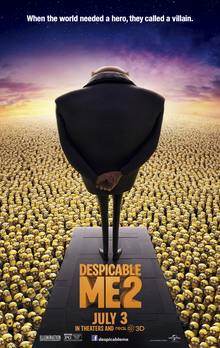
Despicable Me 2 is a 2013 American 3D computer-animated comedy film and the sequel to the 2010 animated film Despicable Me.Produced by Illumination Entertainment for Universal Pictures and animated by Illumination Mac Guff, the film was directed by Pierre Coffin and Chris Renaud, and written by Cinco Paul and Ken Daurio. Steve Carell, Russell Brand, Miranda Cosgrove, Elsie Fisher, and Dana ...
Despicable Me is a 2010 American 3D computer-animated comedy film produced by Illumination Entertainment as its debut film and project and distributed by Universal Pictures.The film was animated by the French animation studio Mac Guff, which was later acquired by Illumination. Directed by Pierre Coffin and Chris Renaud in their directorial debuts with a story by Sergio Pablos, the title ...
Loving Vincent is a 2017 experimental animated biographical drama film about the life of a painter Vincent van Gogh, and, in particular, about the circumstances of his death.It is the first fully painted animated feature film. The film, written and directed by Dorota Kobiela and Hugh Welchman, is a Polish-UK co-production, funded by the Polish Film Institute, and partially through a ...
St Trinian's is a 2007 British comedy film and the sixth in a long-running series of British films based on the works of cartoonist Ronald Searle set in St Trinian's School.The first five films form a series, [citation needed] starting with The Belles of St Trinian's in 1954, with sequels in 1957, 1960, 1966 and 1980.The release of 2007, 27 years after the last entry, and 53 years after the first.
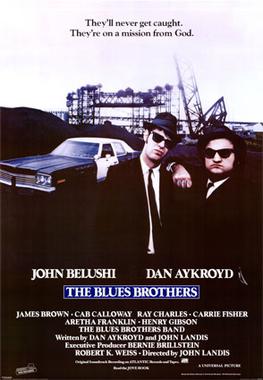
The Blues Brothers is a 1980 American musical comedy film directed by John Landis. It stars John Belushi and Dan Aykroyd as "Joliet" Jake and Elwood Blues, characters developed from "The Blues Brothers" recurring musical sketch on the NBC variety series Saturday Night Live.The film's screenplay was written by Aykroyd and Landis. It features musical numbers by rhythm and blues (R&B), soul, and ...
Peterloo is a 2018 British historical drama, directed and written by Mike Leigh, based on the Peterloo Massacre of 1819. The film was selected to be screened in the main competition section of the 75th Venice International Film Festival. The film received its UK premiere on 17 October 2018, as part of the BFI London Film Festival, in Manchester.
Iron Sky: The Coming Race is a Finnish-German comic science fiction action film directed by Timo Vuorensola, released on 16 January 2019 in Finland.It is the sequel to Vuorensola's 2012 film Iron Sky.The film was crowdfunded through Indiegogo.A major inspiration of the content (and the title) is the Vril conspiracy theory.
The Post is a 2017 American historical political thriller film directed and produced by Steven Spielberg, and written by Liz Hannah and Josh Singer.It stars Meryl Streep as Katharine Graham, the first female publisher of a major American newspaper, and Tom Hanks as Ben Bradlee, the executive editor of The Washington Post, with Sarah Paulson, Bob Odenkirk, Tracy Letts, Bradley Whitford.
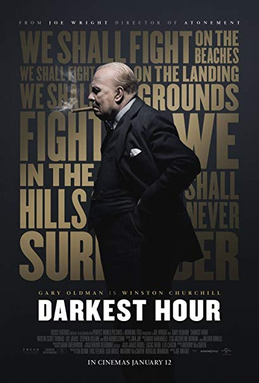
Darkest Hour is a 2017 war drama film directed by Joe Wright and written by Anthony McCarten.Set in May 1940, it stars Gary Oldman as Winston Churchill and is an account of his early days as Prime Minister during World War II and the May 1940 War Cabinet Crisis, while Nazi Germany's Wehrmacht swept across Western Europe and threatened to defeat the United Kingdom.
Monty Python's Life of Brian, also known as Life of Brian, is a 1979
British comedy film starring and written by the comedy group Monty
Python (Graham Chapman, John Cleese, Terry Gilliam, Eric Idle, Terry
Jones and Michael Palin).
It was also directed by Jones.
The
film tells the story of Brian Cohen (played by Chapman), a young Jewish
man who is born on the same day as, and next door to, Jesus Christ, and
is subsequently mistaken for the Messiah.
On the Basis of Sex is a 2018 American biographical legal drama film based on the life and early cases of Supreme Court Justice Ruth Bader Ginsburg.Directed by Mimi Leder and written by Daniel Stiepleman, it stars Felicity Jones as Ginsburg, with Armie Hammer, Justin Theroux, Jack Reynor, Cailee Spaeny, Sam Waterston, and Kathy Bates in supporting roles.
Vice is a 2018 American biographical comedy-drama film written and directed by Adam McKay.The film stars Christian Bale as former U.S. Vice President Dick Cheney, with Amy Adams, Steve Carell, Sam Rockwell, Tyler Perry, Alison Pill, Lily Rabe, and Jesse Plemons in supporting roles. The film follows Cheney on his path to become the most powerful Vice President in American history.
Stan & Ollie is a 2018 biographical comedy-drama film directed by Jon S. Baird and written by Jeff Pope. Based on the later years of the lives of the comedy double act Laurel and Hardy, the film stars Steve Coogan and John C. Reilly as Stan Laurel and Oliver Hardy. It premiered in October 2018 at the BFI London Film Festival.
Crazy Rich Asians is a 2018 American romantic comedy film directed by Jon M. Chu, from a screenplay by Peter Chiarelli and Adele Lim, based on the 2013 novel of the same name by Kevin Kwan.The film stars Constance Wu, Henry Golding, Gemma Chan, Lisa Lu, Awkwafina, Ken Jeong, and Michelle Yeoh. It follows a Chinese-American professor who travels to meet her boyfriend's family
First Man is a 2018 American biographical drama film directed by Damien Chazelle and written by Josh Singer. Based on the book First Man: The Life of Neil A. Armstrong by James R. Hansen, the film stars Ryan Gosling as Neil Armstrong, alongside Claire Foy, Jason Clarke, Kyle Chandler, Corey Stoll, Ciarán Hinds, Christopher Abbott, Patrick Fugit, and Lukas Haas, and follows the years leading up to the Apollo 11 mission to the Moon in 1969.
The Favourite is a 2018 historical period satire film directed by Greek director Yorgos Lanthimos and written by Deborah Davis and Tony McNamara. It is a co-production by producers in Ireland, the United Kingdom, and the United States. Set in early 18th-century England, the story examines the relationship between two cousins vying to be court favourites of Queen Anne. It stars Olivia Colman, Emma Stone, Rachel Weisz, Nicholas Hoult, and Joe Alwyn.
Paddington 2 is a 2017 live-action animated comedy film, directed by Paul King and written by King and Simon Farnaby. Based on the stories of the character Paddington Bear, created by Michael Bond, it is the sequel to Paddington (2014), and is produced by Heyday Films and StudioCanal UK. The film was released in cinemas and IMAX. The film stars Ben Whishaw as the voice of Paddington, with Hugh Bonneville, Sally Hawkins, Brendan Gleeson, Julie Walters, Jim Broadbent, Peter Capaldi, and Hugh Grant in live-action roles. In the film, Paddington tries to get a present for his aunt's birthday, but ends up being framed for a crime he did not commit.
Fahrenheit 11/9 is a 2018 American political documentary by filmmaker Michael Moore about the 2016 United States presidential election and the subsequent presidency of Donald Trump.
Fantastic Beasts: The Crimes of Grindelwald is a 2018 fantasy film directed by David Yates and written by J. K. Rowling.
A joint British and American production, it is the sequel to Fantastic Beasts and Where to Find Them (2016).
It is the second instalment in the Fantastic Beasts film series, and the tenth overall in the Wizarding World franchise, which began with the Harry Potter film series.
The film features an ensemble cast that includes Eddie Redmayne, Katherine Waterston, Dan Fogler, Alison Sudol, Ezra Miller, Zoë Kravitz, Callum Turner, Claudia Kim, William Nadylam, Kevin Guthrie, Jude Law, and Johnny Depp.
The plot follows Newt Scamander and Albus Dumbledore as they attempt to take down the dark wizard Gellert Grindelwald, while facing new threats in a more divided wizarding world.
Bohemian Rhapsody is a 2018 biographical film about the British rock band Queen.It follows singer Freddie Mercury's life from his joining the band in 1970, to their Live Aid performance at Wembley Stadium in 1985.
https://en.wikipedia.org/wiki/Grosse_Pointe_Blank
Grosse Pointe Blank is a 1997 American crime comedy film directed by George Armitage, and starring John Cusack, Minnie Driver, Alan Arkin and Dan Aykroyd. Cusack plays a hitman who returns to his hometown to attend a high school reunion.
Set in the 1930s, a time when Britain is dangerously divided and suspicion and hatred are on the rise, the story sees Poirot face a serial killer known only as A.B.C. As the body count rises, the only clue is a copy of The ABC Railway Guide at each crime scene. Poirot's investigations are continuously thwarted by an enemy determined to outsmart him. If Poirot is to match his nemesis, then everything about him will be called into question: his authority, his integrity, his past and his identity.








:no_upscale()/cdn.vox-cdn.com/uploads/chorus_asset/file/10842827/958781106.jpg.jpg)
:no_upscale()/cdn.vox-cdn.com/uploads/chorus_asset/file/9038815/6.jpg)
:no_upscale()/cdn.vox-cdn.com/uploads/chorus_asset/file/7028481/duke.png)